Josh doubled my pipeline goal on a live podcast. Here’s my 2027 plan to hit it.
I pitched my 2027 marketing plan to Josh live on the podcast. Here are the three big bets behind a doubled pipeline goal, the gated budget, and the hires I asked for.

Most budget asks happen behind closed doors. But at Vector, we like to shake things up… so I made mine live during a special episode of This Meeting Annual Planning Could’ve Been a Podcast, where Josh and I walked through my 2027 marketing plan, the goals we’re setting for the year, and the bets we’re making to get there.
Josh thinks I did it to get him to commit to my budget in front of witnesses. (He’s not wrong. 😏)
Here’s the plan I presented, how Josh reacted, and the questions you asked along the way. Steal whatever’s useful for your own planning.
I start with a story, then bring the spreadsheet
I like to open any planning session or budget ask with a good ol’ story. It sets up the environment we’re in, so everything that follows has context.
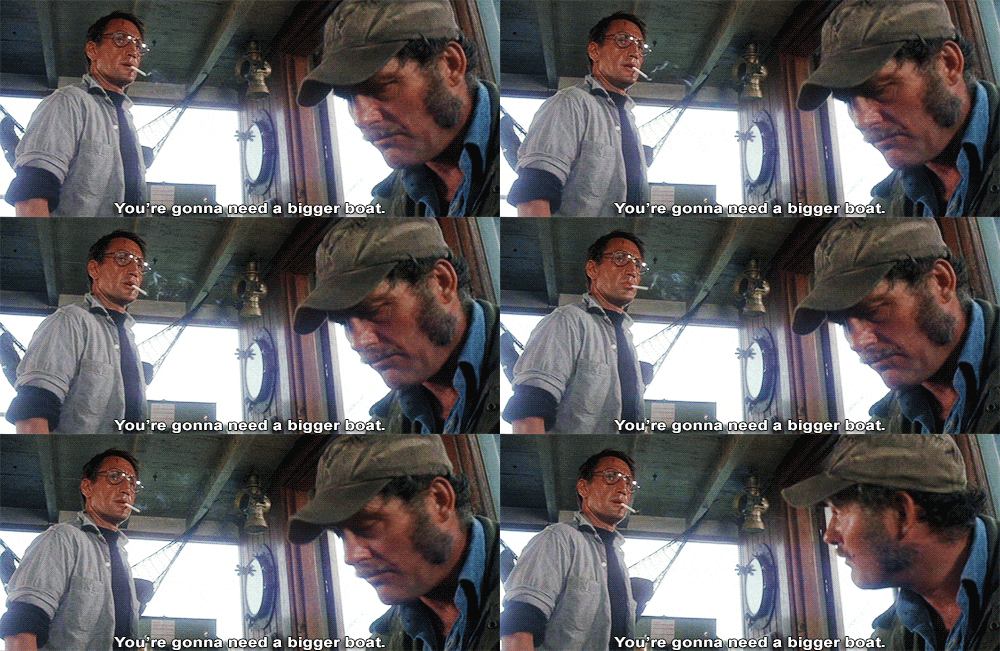
Last year’s story was the classic line from Jaws: we’re gonna need a bigger boat. For about a year, our marketing team was me and Alex, who leads our product marketing. If we wanted to keep growing, we needed to invest in demand gen, content, and ABM. AKA, the bigger boat.
This year’s story comes from Seinfeld, a show near and dear to this elder millennial’s heart. Jerry shows up to pick up a rental car he reserved, and there’s no car. He says to the agent, “you know how to take the reservation, you just don’t know how to hold the reservation.”
How we plan
Last year’s plan, this year’s plan
2026 PLAN
2027 PLAN
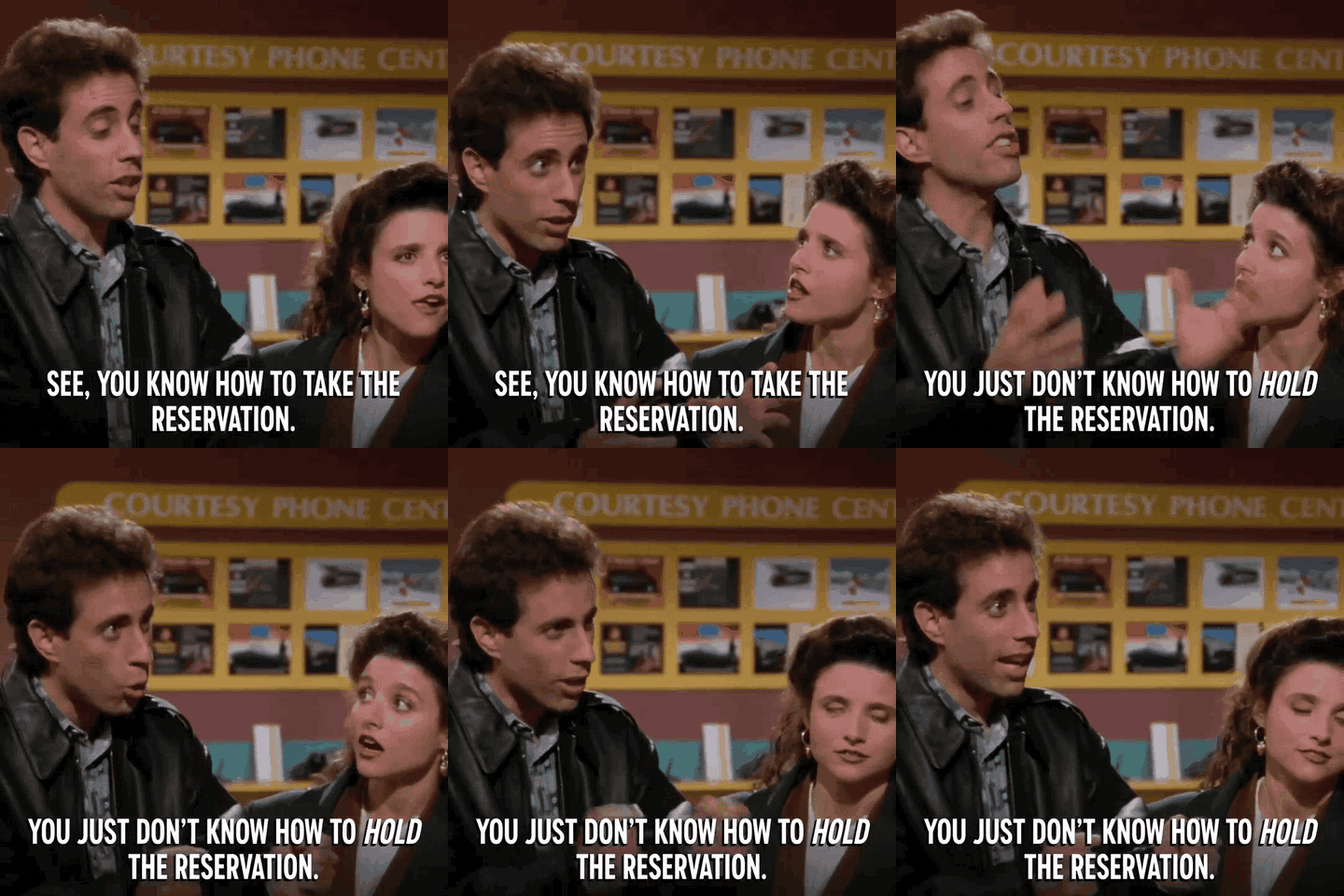
That’s our theme for 2027. This year, Vector went from a point solution to an ABM platform. We’re focused on a different audience now, and pipeline quality shifted along the way. We know how to take the reservation. Now we have to hold it.
This storytelling is a little psychology trick that seems to work. Josh and I are in our third year planning together, and every year has started with a story(opens in a new tab). Mine isn’t the only budget he’s reviewing over the next month, and the narrative is what makes it stick. In his words: “Your ability to tie it into a narrative that captures me is a huge part of why historically you’ve gotten all of your budgets approved.”
My three big bets to reach a doubled pipeline goal
Yes, that’s right. My pipeline goal is doubling for 2027. We raised our Series A this year, found strong product market fit this year, and now it’s time to scale.
Every year, I boil marketing’s 2352669 initiatives down into a few big rocks. These are the big bets that I believe will help us reach that pipeline goal. Here are mine for 2027:
- 1ABM. We’re an ABM platform now, so I want us running ABM on our own platform and showing how we get results with it. Drinking our own champagne, if you will. 🍾
- 2Brand and story. I think this is our real superpower. We’re mostly known for our brand, our ad creative(opens in a new tab), and the weird stuff we do that stands out(opens in a new tab). I want to use brand and demand together to amplify those stories really well and really efficiently.
- 3Events. We saw incredible success with events this year. But I made the tiny mistake of putting them all in one month. Next year, we’re spreading the wealth.
Underneath all three, we’re moving upmarket. (I know, shocker.) But as we made the move to an ABM platform, it made total sense. When Alex and I looked back at the year, a cohort of mid-market to enterprise customers retained really well as the product grew. We found a new audience that loves us, and our pipeline quality shifted as we figured out how to go after them. So pipeline quality becomes a new KPI for 2027, and maybe the most important one I own.
Here’s how each of those big bets plays out.
Bet one: ABM is just B2B marketing
We have a specific point of view on ABM at Vector. It’s no longer a motion only enterprise companies can run. With the tech, signals, and motions available today, ABM really just is B2B marketing, and that’s how I’m building my strategy.
I think of it as one continuum, from 1:many to 1:1(opens in a new tab). What most people call demand gen is the 1:many part of ABM. Even then, you’re still marketing to a specific audience.
This is where everything falls:
- 1:many: brand and demand, reaching people who could be in market at some point. Our podcast lives here as one of our awareness magnets.
- Toward 1:few: general outbound.
- 1:few and 1:1: our ABM motion, about 90 key accounts a quarter.
- 1:1: our whales program, run by sales and guided by marketing. Sidecars sit here, too. These are private events we host alongside a sponsored event, with invitations to specific buyers at our top accounts.
Why 90 accounts, and why every quarter
Every quarter, we select 90 accounts. That number isn’t arbitrary. We backed into it from our win rate and ACV: how many accounts do we need to target to hit our pipeline goal? Every account fits specific criteria like company size and annual revenue.
A lot of them are already running ABM. Josh talks a lot about an idea we borrowed from Seth Godin: find your tribe. We don’t want to have to win someone over on the idea that ABM is a great strategy. They have to already believe in it. They’re already running ABM but want a better way to do it, maybe a contact-level way(opens in a new tab) or one with more visibility.
We also pick a new list every quarter, which is different from how most teams run ABM. Typically, you sit down with RevOps once a year, pick your target accounts on January 1, and work that list all year, but Josh sees that as a fatal flaw. If an account starts showing up on your website in March with a real need for you, the list can’t react.
Vector shows us which accounts are in market(opens in a new tab), so we rotate in a new cohort of 90 every quarter. Each cohort gets 90 days of marketing attention to build awareness, and then sales gets another 90 days to get them through the door.
If a handful of accounts are close at the end of a quarter, we can make a bid to hold them for one more. Sometimes marketing just needs a couple more at bats to get them over the line.
What the 90 get
With all the signals we can capture today(opens in a new tab), we know a lot about these accounts: their behavior, their tech stack, what they’re researching, how they interact with our site, and which of our ads they click. We use that to build programs around the buying committee. Ads focused on the committee(opens in a new tab) and how it buys, and outbound that uses the same context.
Gifting is still a test. We tried something simple and fun for Halloween, and nobody claimed their gift. Maybe everyone was at their kids’ parties. The point is, they’re not all gold, and that’s why we test. Our next experiment is a more custom gift.
What’s working well right now is invites to webinars and in-person events. Those invites convert to demos at a high rate. The credit goes to Abbi, who runs our outbound program. Her outbound(opens in a new tab) is an amplification of everything else we’re doing, like inviting people to an event or a dinner or pointing them to a new piece of content. It’s cheap, and it’s really effective.
Why outbound lives under marketing
Speaking of outbound: earlier this year, I went to Josh and said it needs to live within marketing. Marketing is tasked with building 90% of our pipeline, and that’s the same story next year. If that’s on us, we need real control over the messaging, the follow-up, and the measurement. Are we going after the right people? Are we saying the right things? Is it working? If it’s not, we can pivot quickly to a new message or program.
It’s a fun challenge, and it lets us control our own destiny a bit. I’ve been places where that wasn’t the case, and it’s a tough push-pull. As Josh said, “Where most things break down is when marketing does an incredible job and then tries to throw things over the fence at sales.”
Bet two: a story every quarter, fed by product
With ABM running, we still need the brand and demand programs that feed it. Here’s how I’m thinking about bringing our story to life every quarter, so we can build strong brand and demand programs and then filter that story down into ABM and the more personalized stuff.
It starts with product.
Product and product marketing are a huge foundation of our marketing strategy. So six weeks before each quarter begins, I’m asking product and engineering for a high-level look at what’s coming:
- Major releases, and whether each is a tier one or tier two launch
- What each release does and who it’s for
- Any new signals and integrations, and what they help a marketer do
- Dates that get more solid as the quarter gets closer
- Any proof from the platform, like first-party data we might be able to share
With that, marketing can find the thread across the releases. What’s the story? What buyer problem does it solve? What’s the headline theme for the quarter? Then we break that theme into different angles and run it through everything: content, webinars, ads, outbound and ABM, what we talk about at the booth, the questions we bring to sidecar events, sales enablement, and how we show Vector using Vector(opens in a new tab). I’m so excited about this, because it gives people a real idea of what we stand for based on what the product can help them do.
Bet three: events, but spread across the year this time
Events are the third bet, and the one where I learned the most this year. This year, we crammed nearly all of our events into September. It sounded so fun on paper, and we did blow our pipeline goals out of the water. Buuuut it was also the most insane month of our lives. Being on for basically three weeks straight wasn’t sustainable for the people who had to be there. I learned that you gotta spread the goodness a bit.
So the 2027 plan is one major sponsored event per quarter, plus sidecar events where we can do something private and special for tier one accounts and buyers we’re excited to get to know better. The first one is locked in: we’re the title sponsor for Exit Five’s marketing leadership retreat in March. I’m proposing three more.
We’ve also learned which events work for us. We’ve mostly seen success at smaller, community-driven events(opens in a new tab) over large trade shows. Even so, Unbound is on my list. We did very well there, but that’s because we showed up as a known brand. We’d been targeting attendees with ads and with content in sponsored newsletters before we got there, and we’re very active on LinkedIn. People knew us before they came to the booth.
I think a lot of people underestimate this: it’s all about the brand, baby. That dictates how well you do at these shows.
OK… time to ask for the budget
Drumroll, please… 🥁 My budget ask for 2027 is about 15% of our total ARR goal for 2027, salaries included.
To put that number in context for anyone making a similar ask, 15% for marketing is generally pretty average. Josh said he’s seen that number shrink as budgets got tighter, with some companies going as low as 5 to 7%.
For us, 15% is on the high side but reasonable, because marketing carries the lion’s share of pipeline. As Josh said, “You can’t just hire a bunch of AEs, ask them to send cold email, and expect that they’re all gonna hit their number.”
Gated budget
To make it a little easier to swallow, I built in gated budget: separate tranches that open up only if we hit our ARR goals. Say we’re nearing the end of Q1 and things are going well. We open gate number one, and that unlocks extra budget for a specific, prioritized thing we wouldn’t otherwise get to do. If we don’t hit the goal, the gate stays closed.
Things we might unlock include:
- New paid channel tests (we’ve never tried Reddit)
- Extending a big community sponsorship through H2
- An analyst report, as we start thinking about analyst relations
- Out of home (that one’s really exciting to me)
- A field marketer
Hires
Three roles are on my list for 2027:
- Product marketing manager. This is the big one. This year, Alex took on GTM strategy on top of product marketing, and she’s great at the GTM strategy side. I want her to have room to focus on it. A product marketing manager under her would take on launches, messaging, and enablement. We need more helpful stuff to give sales, especially now that product marketing drives our story every quarter.
- Marketing development representatives. This isn’t a job we have at Vector yet. Abbi just started a Q4 blitz so we’ll use the results of that to make a call on whether to scale her outbound program and bring MDRs into marketing next year.
- Field marketer. This one sits behind a gate. If we hit our ARR goals, a field marketer could join in the back half of the year to handle the many little logistics behind all the events we have planned.
The weirdness fund
This is a fun one. Credit where it’s due: the idea comes from the PostHog team, whose marketing I really admire. They talk pretty openly about their own weirdness fund. Mine is smaller, a set amount each quarter earmarked for ideas that are a little crazy but could be super cool.
What I’d borrow for your own planning
If you’re walking into your own planning meeting soon, here’s what I’d steal from mine:
- 1Open with a story. A narrative gives your CEO a reason to care before they ever see a number.
- 2Boil the plan down to a few big bets. Twenty or thirty initiatives turn into three rocks someone can remember.
- 3Show your CEO how the pieces connect. Brand feeds outbound, outbound feeds ABM, and suddenly top-of-funnel spend makes sense.
- 4Ask for the core budget you need, and put gates on the rest. Your CEO only has to commit to what runs the plan, and your team gets something to chase.
Want to see it all play out live? Watch the full episode(opens in a new tab), and follow along on LinkedIn(opens in a new tab) to see what made it into my 2027 budget.
Q&A
How do you choose the 90 accounts each quarter?
RevOps brings us a great starter list based on agreed-upon criteria. Sales and marketing review it together, then we hand it back to RevOps to get it up and running in all of our systems. The best way for ABM to fail is if sales isn’t excited about the accounts on the list, so they have to feel good about it. We also use Vector to see which accounts are already in market(opens in a new tab), based on signals like people engaging with our brand or ads, or a company hiring ABM marketers.
How are you navigating attribution for ABM targets when marketing and sales are working the same accounts?
We’re working through this right now. When someone books a demo, we capture the last thing that brought them in, like a webinar, an ad, or an outbound email. That becomes the deal source, and it stays fixed once the deal is created. Outbound-created deals get tagged as outbound from the start. Abbi also tracks what she touched versus what she sourced(opens in a new tab), so we can see outbound’s influence even when it isn’t the deal source. The open question is what happens when several people from one account are on a deal. For now, the person who booked the demo wins. Ask us again next quarter.
For a small team with limited budget, which one or two tactics on the continuum would you start with to get ABM results fastest?
Start with outbound that amplifies what you’re already doing. Ours isn’t designed to be bottom of funnel. Instead of pushing for a meeting right away, we invite people to an event or a dinner we’re hosting, or point them to a new piece of content our team just put out. It doesn’t take lots of ads or lots of events to make it work, so it’s a low-cost way to get in front of the right accounts.
As ABM gets more signal-driven, what role do you see AI playing in Vector’s product in 2027? Helping pick accounts, timing outreach, or something else?
For us, it starts with scoring. Specter(opens in a new tab), our account scoring model, uses machine learning to place every target account in a buying stage. Then a language model explains why in plain English and names the people driving it. It re-scores every account daily, so it helps with picking accounts and with knowing when they’re ready for outreach. It’s also how we’ll pick our own 90 accounts each quarter.
Being an ABM platform, I imagine you have to have a best-in-class ABM approach. How do you make your programs stand out?
It starts with who owns what. Marketing is responsible for 90% of our pipeline, and outbound lives in marketing, so we control the messaging, the follow-up and the measurement all the way to a booked meeting. Sales helps pick the 90 accounts we target each quarter and takes over once marketing has given them 90 days of attention.
What makes it stand out is the brand behind it. Our brand is our superpower, so by the time Abbi invites someone to a dinner, a webinar, or a private sidecar event, they usually already know us. We test gifts that feel custom, make our customers the rock stars, and we’re setting aside a weirdness fund for ideas that are a little crazy but could be really cool.
How do you get event budgets approved?
Our rule for events is a one-to-one return. If we’re confident we’ll get our money back out of an event, everything else is gravy. That’s hard to apply to most budgets, but events are different. If the right people are in the room and we can convert them, the math is pretty clear.
To get there, I ask the organizer what percentage of our target account list will be there. They won’t always share the attendee list, but if they want your sponsorship dollars, they’ll usually run the numbers for you. I also look at how much of our target account list is part of the community the event is built around. It’s a really helpful guidepost to have in your toolkit.
What didn’t make the 2027 plan?
We’re retiring the Ghost Tour Tour(opens in a new tab) next year. This was a private dinner plus a walking ghost tour, a sidecar we brought to four events we sponsored this year, mostly with demand gen practitioners. It was super successful and did as much for brand awareness as it did for pipeline. As we move upmarket and try to set the table with more senior marketers, we need something a little more bougie, some sort of unique experience they might not plan for themselves.
Did you consider a half-year plan instead of a full year?
I was asked what next year looks like, and I wanted to give that as much thought as possible. The first half is more set, but there’s still plenty of room to shift in the back half. It’s very wet cement. I’m recommending some events for the back half, but things could change.
A flexible plan has real upside. It’s easier to sell to your leader, because you’re checking off boxes as you get there. The risk is that in a lot of organizations, the budget you don’t lock in during planning isn’t there when July 1 comes around. You show up with results and ask where your budget is, and the answer is that things have changed. That’s why I built mine with a committed core budget for the year, plus variable pieces that unlock as we’re successful.