


We’ve got a theory about why traditional ABM feels broken.
For years, the category has made one promise: identify the right accounts, and everything else will follow. Better spend, faster deals, and pipeline influence you didn’t have to defend until you’re blue in the face.
Sounds great, right?
The problem is, legacy platforms sold a vision of growth their tech couldn’t live up to.
Today we’re launching a new version of Vector that can.
What’s missing today
The core idea behind ABM still makes as much sense as it ever did: focus your limited time and budget on the accounts that are most likely to buy.
But knowing an account mattered was never the same as knowing what to do about it. When all you have is a score you can’t explain and an alert that says, “Acme Corp is showing intent,” Sales is left to guess at the questions the score is unable to answer:
- Who inside that account actually matters?
- What did they just do that’s worth paying attention to?
- What should Marketing or Sales do next?
- Did we end up reaching those people?
- What happened after we did?
Vector is now built to connect that entire loop and help you see who’s really behind the activity, understand why an account is moving, act on it across campaigns, and prove what it did for pipeline.
Okay, but how?
The whole thing revolves around four steps:
1. Know where they stand
This is the part that decides whether anything downstream is worth trusting. Aim at the wrong people, and nothing you build on top of it matters.
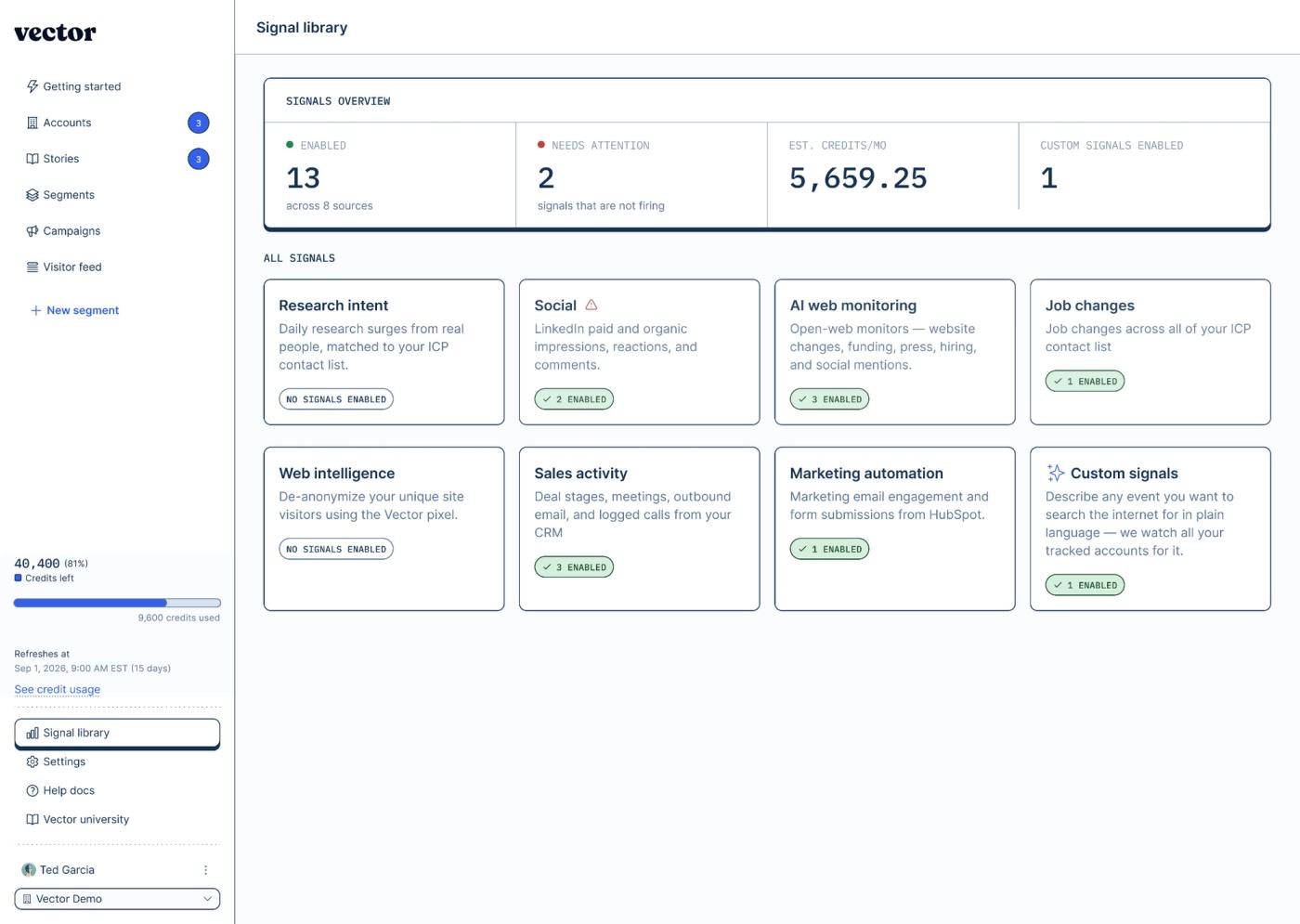
Vector’s new library of 30+ buying signals helps you capture evidence from sources like research activity, website behavior, or company events. You choose what’s relevant to how you actually sell, each signal shows what it costs before you turn it on, and anything already sitting in your CRM or your social activity doesn’t cost you anything to use. If what you need isn’t on the list, we’ll help you build custom signals, backed by citations and a confidence score with every detection.
2. Know where they stand
A score without a reason doesn’t help anyone make a decision, especially Sales, who’s been burned by “hot account” alerts that went nowhere.
That’s why Vector’s new account scoring always comes with the receipts. 🧾 As Vector collects signal-based evidence across your tracked accounts, it organizes those accounts into one of these buying stages:
- Identified
- Aware
- Interested
- Considering
- Selecting
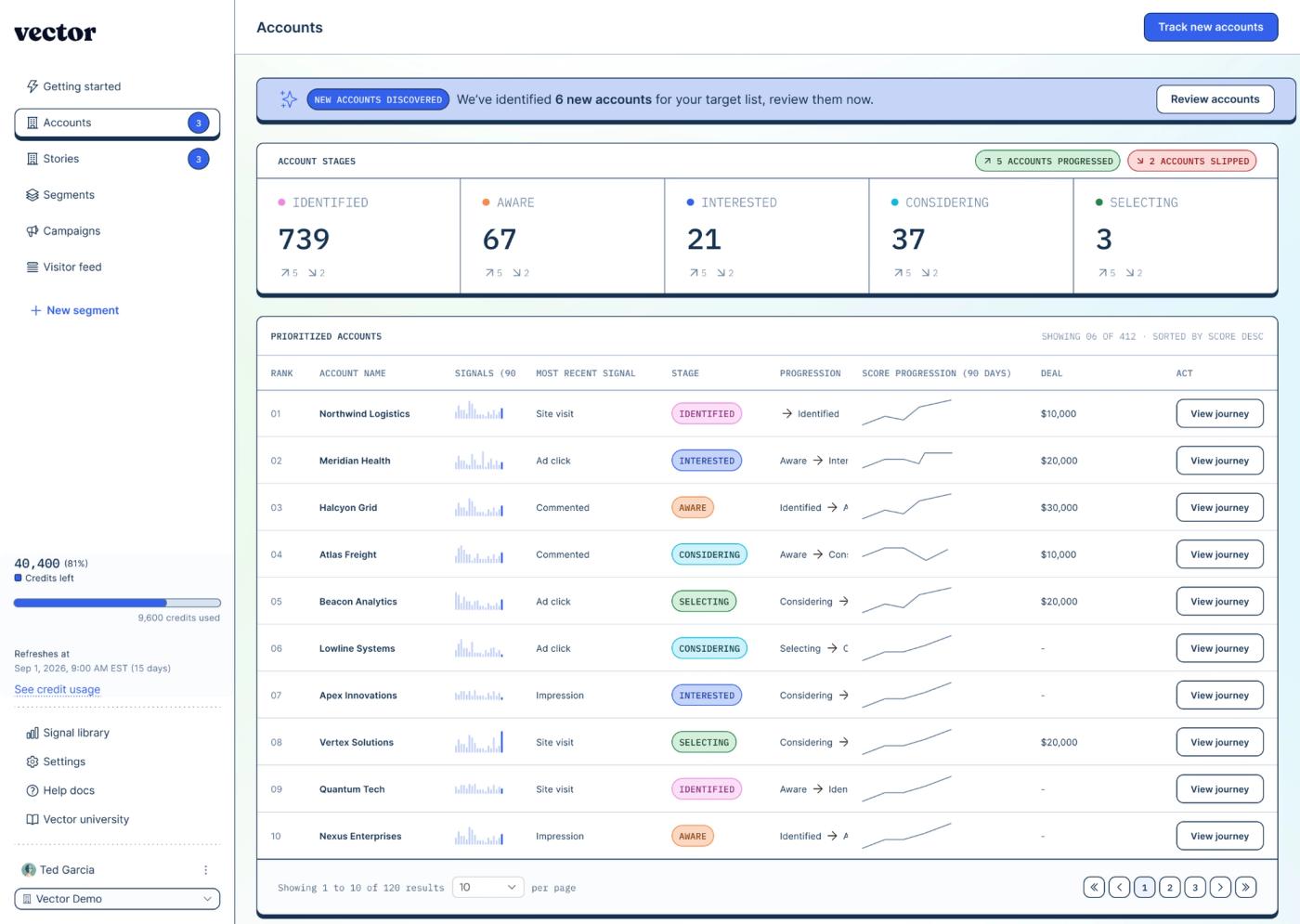
Each stage is tied to the specific signals that moved it there, and refreshed daily so it never goes stale. This staging only runs against the accounts you select to go after, so scoring and signals stay focused on accounts worth your team’s attention instead of every company that could theoretically fit.
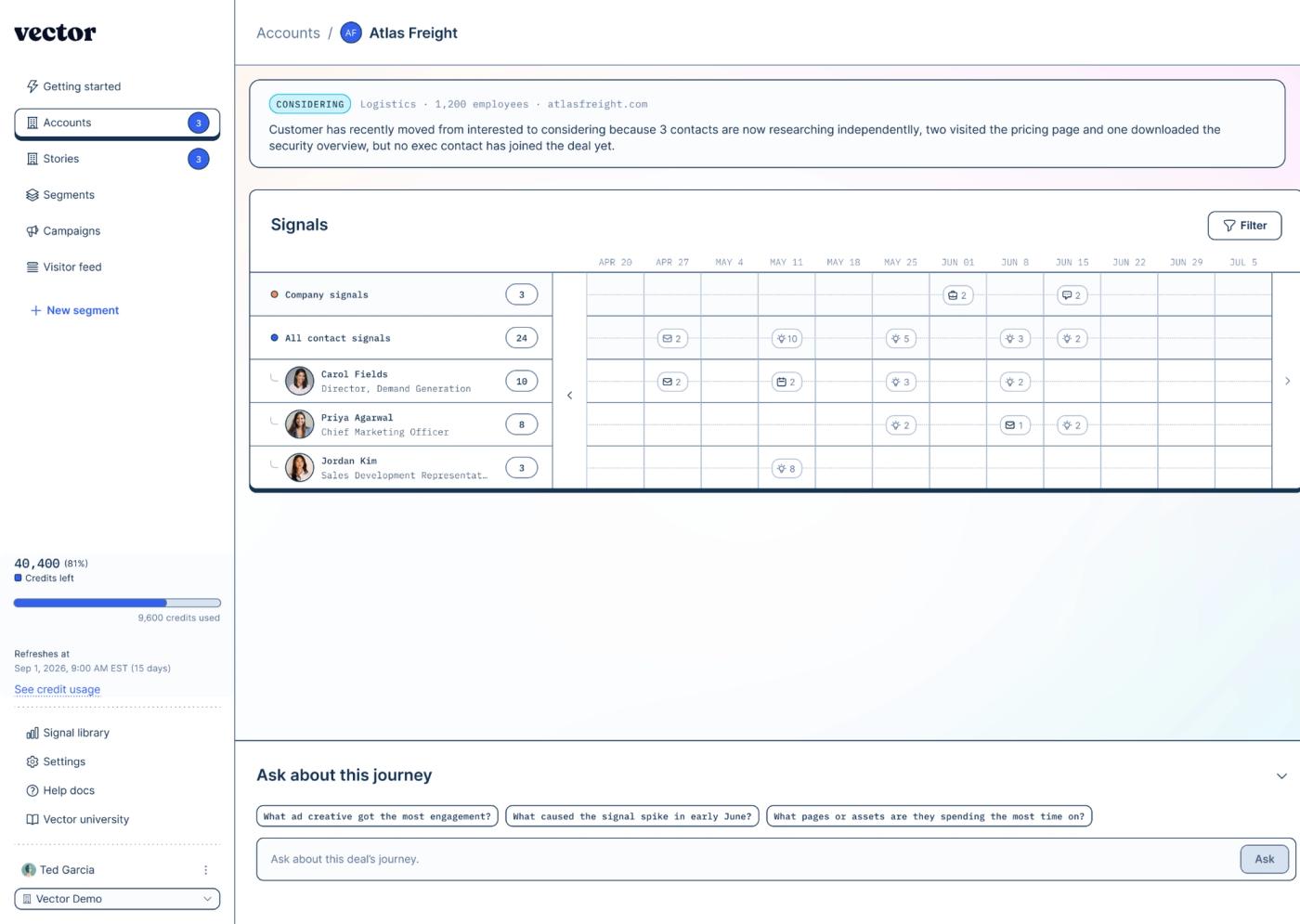
Every one of those accounts also gets its own Account Journey: every signal, marketing touch, and sales activity, contact by contact, from first touch to deal created. Click into any event and see exactly what happened, who was involved, and which campaign it came from. Bonus: because every touch across the whole buying committee lands on that same timeline, you can see who you haven’t reached yet just as clearly as who you have.
3. Turn buyer movement into action
None of this context matters if it just sits in a dashboard. The point is reaching the actual buying committee while the moment’s still relevant, not three weeks later once you’ve rebuilt an audience by hand.
Vector turns your signals directly into ad audiences, built from site activity, research intent, CRM data, or wherever an account sits in its stage, and pushes them to the platforms your buyers are on: LinkedIn, Google, Meta, YouTube, Reddit, TikTok, Snapchat, Pinterest, X, Bing.
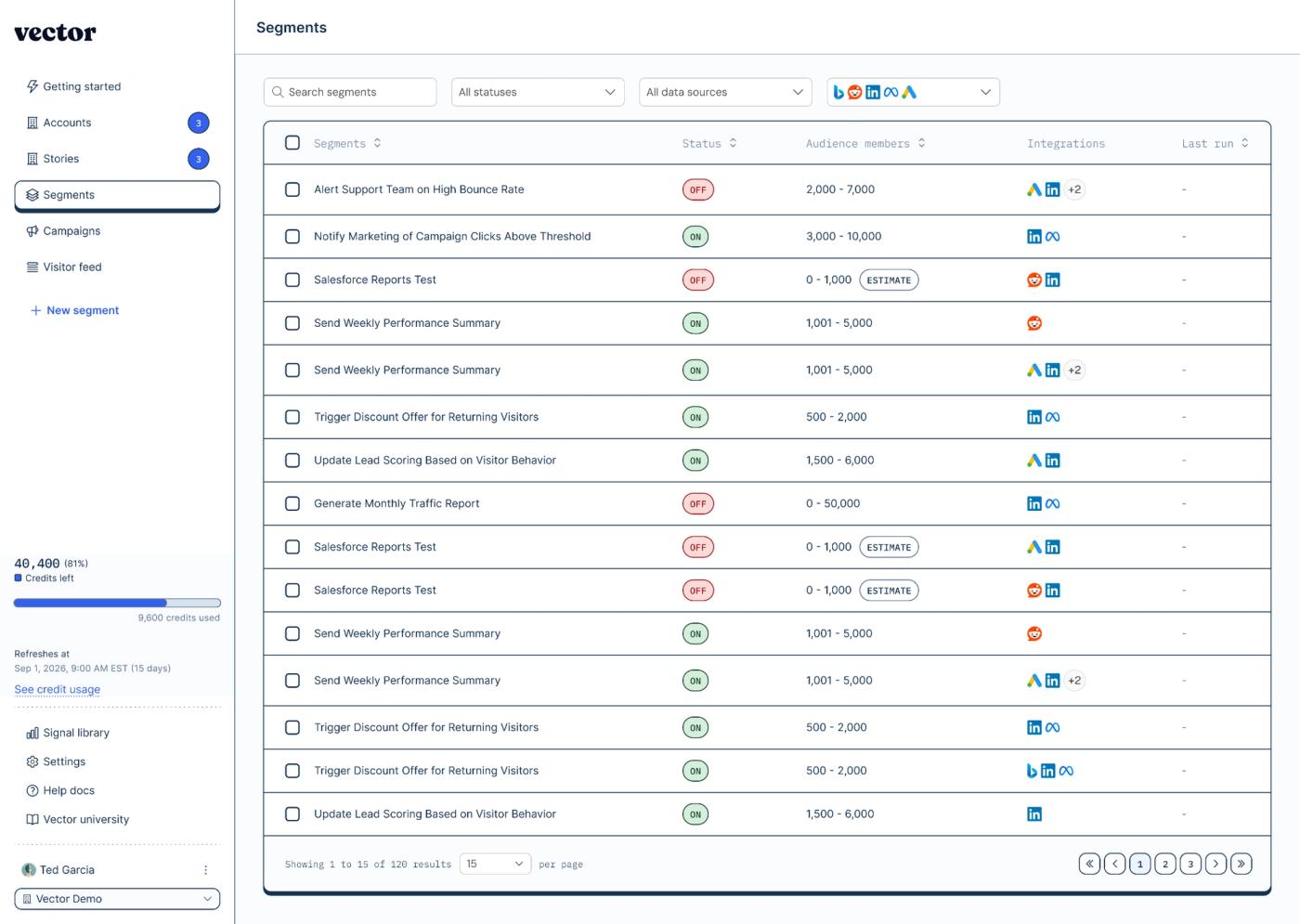
Because the targeting happens at the contact level, you’re reaching people instead of accounts, including in B2C spaces where account-level targeting usually falls apart. And anyone who isn’t ICP or part of that buying committee never makes it into the audience, so you’re not wasting spend chasing the wrong person.
4. Prove what happened
After launching a campaign, every marketer knows they’ll get asked the inevitable question: did it work?
Vector brings the buyer journey, marketing activity, and opportunities together to give you a more defensible answer to that question. Now you can see every step on the way to pipeline, so you have proof to point to (and Marketing gets the credit it deserves).
When a deal opens or closes, Account Stories turns the evidence into a plain narrative, showing the moments that moved it, the buyers involved, the specific sequence of activity, and what happened before or during the opportunity.
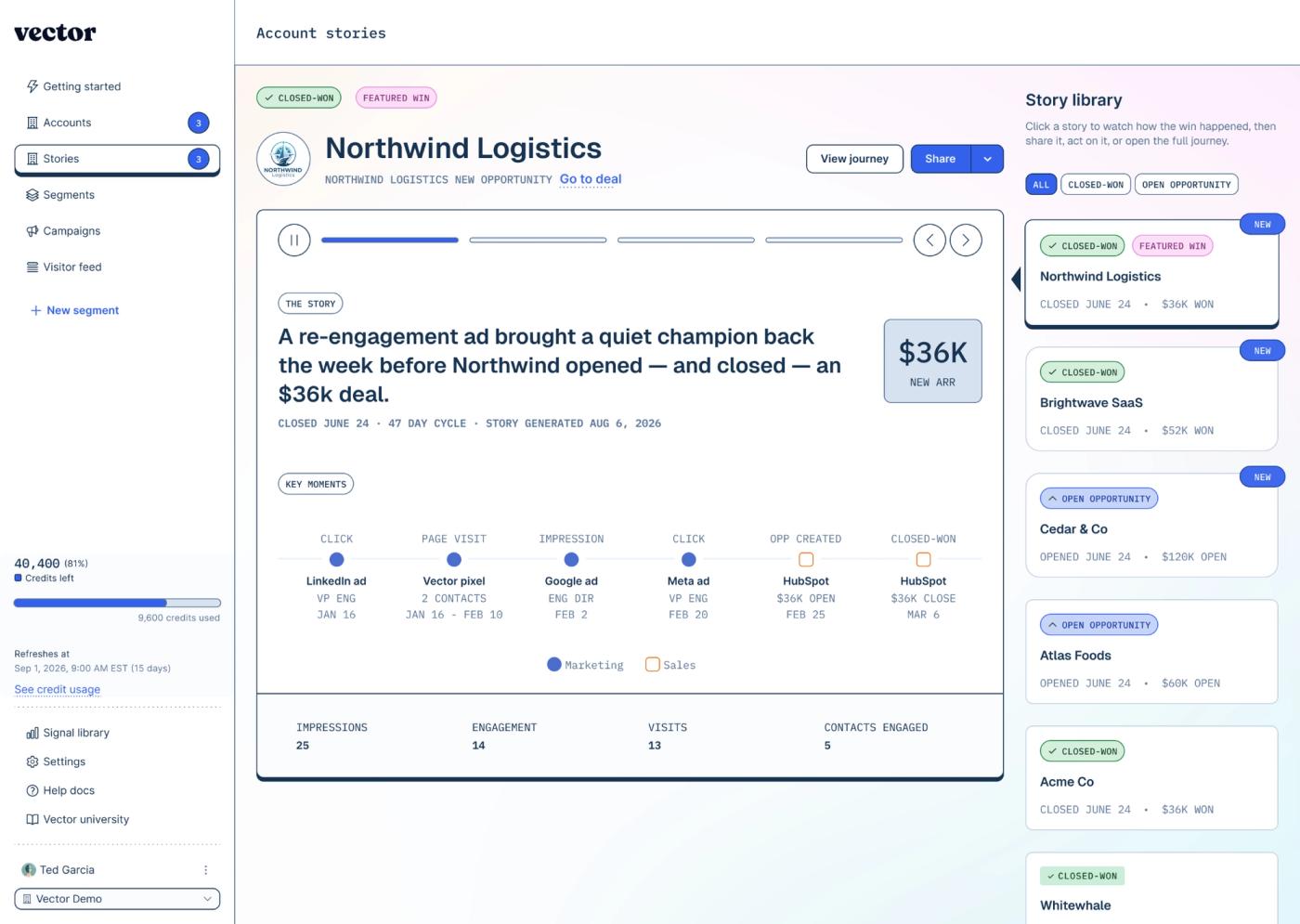
Reporting goes down to the specific creative, too. You can trace deal progression down to the actual image, video, or line of copy that showed up along the buyer journey, not just an ad ID and a channel.
With these reporting updates, you see exactly where marketing had impact, so you can draw a direct line between the resources you spent on that campaign and the real revenue it brought to the business.
What this means for your ABM strategy
Whether you have a sophisticated ABM motion running or you’re just getting started, none of this means the account-based thinking behind it was wrong. Focus over spray-and-pray still holds up. What we’re changing is what happens after you pick the accounts, so a target list turns into real people you can reach and real evidence you can bring into a budget conversation.
Finally, ABM works the way you thought it would.